
Why Identifying Acne Scar Types Matters
Understanding your acne scar type is one of the most important steps in choosing the right acne scar treatment. Different scar types respond to different procedures, which is why successful acne scar treatment often begins with a detailed scar assessment. At Dami Clinic Yeouido, acne scars are evaluated based on their depth, shape, severity, skin type, and overall skin condition before creating a customized treatment plan.
The most common acne scar types include ice pick scars, boxcar scars, rolling scars, and mixed atrophic scars. Many patients have more than one scar type, which often requires a combination of treatments such as subcision, TCA CROSS, RF Microneedling, laser resurfacing, Rejuran, and Juvelook to achieve the best possible improvement.
International patients benefit from personalized consultations, advanced skin analysis, and evidence-based treatment plans tailored to their unique scar patterns and skin goals.
Acne scars develop when inflammation damages the deeper layers of the skin. During the healing process, the skin may produce too little or too much collagen, resulting in permanent changes to skin texture.
Many patients assume all acne scars can be treated the same way.
However, treatments that work well for one scar type may be less effective for another. Proper diagnosis helps improve treatment outcomes while minimizing unnecessary procedures.
Factors that influence treatment planning include:
- Scar type
- Scar depth
- Skin thickness
- Skin tone
- Pigmentation risk
- Previous treatments
- Overall skin condition
 Medically reviewed by Dr. Kim Myung-Jin, member of the Korean Acne Society · Updated October 2026
Types of Acne Scars
Ice Pick Scars
Ice pick scars are narrow, deep scars that extend into the deeper layers of the skin.
Characteristics include:
- Small openings on the skin surface
- Deep vertical penetration
- Sharp edges
- Commonly found on the cheeks
Ice pick scars are often among the most challenging acne scars to treat because of their depth.
Best Treatments for Ice Pick Scars
Common treatment options include:
- TCA CROSS
- Laser resurfacing
- RF Microneedling
- Combination therapies
TCA CROSS is frequently recommended because it specifically targets deep scar depressions and stimulates collagen remodeling.
Boxcar Scars
Boxcar scars appear as round or oval depressions with well-defined edges.
Characteristics include:
- Wider than ice pick scars
- Flat scar bases
- Sharp borders
- Variable depth
These scars often develop after inflammatory acne lesions heal.
Best Treatments for Boxcar Scars
Common treatment options include:
- RF Microneedling
- Laser resurfacing
- TCA CROSS
- Skin boosters
- Combination treatments
Treatment selection depends on scar depth and overall skin quality.
Rolling Scars
Rolling scars create a wave-like appearance across the skin surface.
Characteristics include:
- Broad depressions
- Soft edges
- Tethering beneath the skin
- Uneven skin texture
These scars are caused by fibrous bands pulling the skin downward.
Best Treatments for Rolling Scars
Common treatment options include:
Subcision is often considered one of the most effective treatments because it releases the tethering beneath the skin.
Mixed Acne Scars
Most patients do not have just one scar type.
Mixed acne scars may include:
- Ice pick scars
- Boxcar scars
- Rolling scars
- Enlarged pores
- Acne pigmentation
Because multiple scar patterns are present, combination treatment plans are often recommended.
Atrophic Acne Scars
Atrophic scars are the most common type of acne scars.
These scars occur when insufficient collagen is produced during healing, resulting in depressed areas of skin.
Types of atrophic scars include:
Most acne scar treatment programs focus on improving these scar types.
- Ice pick scars
- Boxcar scars
- Rolling scars
Hypertrophic and Keloid Scars
Not all acne scars are depressed.
Some patients develop raised scars.
Hypertrophic Scars
These scars remain within the original acne lesion boundaries and appear elevated above the skin surface.
Keloid Scars
Keloid scars extend beyond the original area of injury and may continue growing over time.
These scars require different treatment approaches than atrophic acne scars.
What changes with treatment
Drag the handle to compare.
Enlarged Pores vs Acne Scars
Many patients confuse enlarged pores with acne scars.
Although enlarged pores and acne scars may coexist, they are different conditions.
Enlarged pores are often associated with:
Treatment strategies may differ depending on the underlying cause.
- Excess oil production
- Aging
- Previous acne
- Collagen loss
Dami Clinic Acne Scar Assessment
At Dami Clinic Yeouido, acne scar treatment begins with a detailed assessment.
Evaluation may include:
This allows providers to create customized treatment plans tailored to each patient.
- Scar type analysis
- Skin texture assessment
- Skin sensitivity evaluation
- Pigmentation risk assessment
- Treatment history review
Common Treatments for Different Scar Types
TCA CROSS
Frequently used for:
- Ice pick scars
- Deep narrow scars
Subcision
Frequently used for:
- Rolling scars
- Tethered scars
Potenza RF Microneedling
Frequently used for:
- Boxcar scars
- Rolling scars
- Enlarged pores
Sylfirm X
Frequently used for:
- Acne scars
- Redness
- Skin texture concerns
Secret RF
Frequently used for:
- Acne scars
- Pore improvement
- Skin rejuvenation
Rejuran
Frequently used for:
- Skin regeneration
- Scar healing support
Juvelook
Frequently used for:
- Collagen stimulation
- Long-term skin quality improvement
Laser Resurfacing
Frequently used for:
- Multiple scar types
- Skin texture improvement
Why Combination Treatments Often Work Best
Many acne scars exist at multiple levels within the skin.
Because of this, treatment plans often combine:
Combination treatments frequently provide more comprehensive improvement than a single procedure alone.
- Subcision
- TCA CROSS
- RF Microneedling
- Laser resurfacing
- Skin boosters
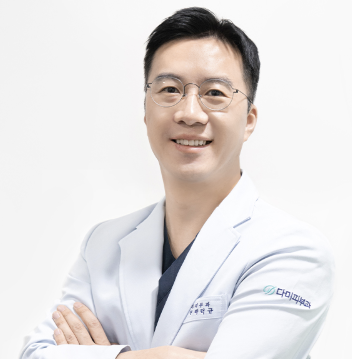
Dr. Park Deok-Gyu, Director
Acne scars · Laser dermatology. MD, Soonchunhyang University College of Medicine; residency at Soonchunhyang University Hospital; cosmetic surgery training at UCLA. Member, Korean Society for Investigative Dermatology and Korean Academy of Aesthetic Surgery & Laser Medicine.
Meet all three physicians →Why Choose Dami Clinic Yeouido?
- Comprehensive scar analysis
- Customized treatment planning
- Advanced acne scar procedures
- RF Microneedling expertise
- Regenerative skin therapies
- English-speaking consultations
- International patient support