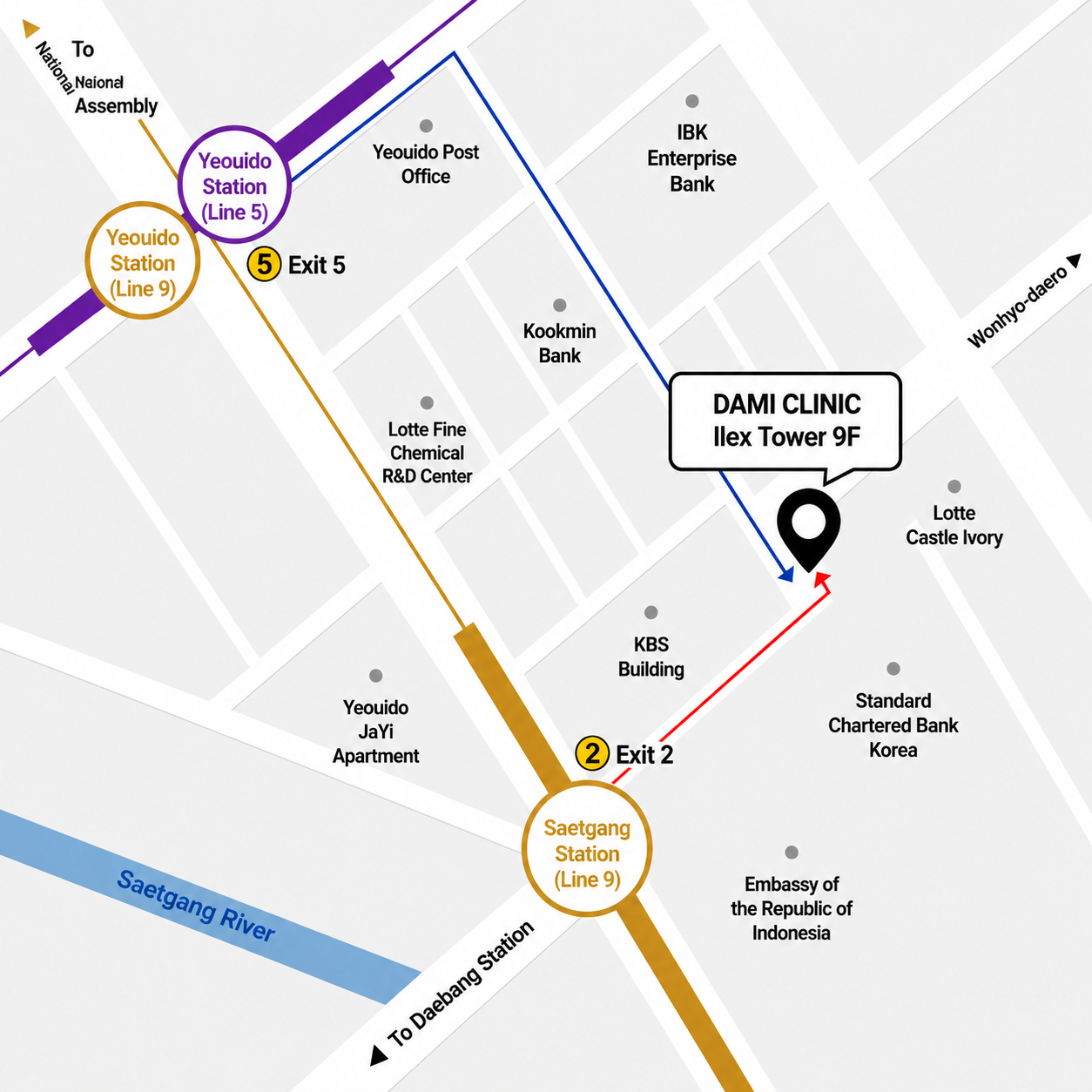
TCA CROSS Treatment in Seoul, Korea | The Dami Skin Clinic Yeouido
TCA CROSS treatment in Seoul is a highly effective procedure for improving deep ice pick scars, narrow boxcar scars, and stubborn atrophic acne scars that do not respond well to surface resurfacing alone. At The Dami Skin Clinic Yeouido, TCA CROSS is performed as part of a personalized acne scar treatment plan designed to stimulate collagen production and gradually reduce scar depth.
TCA CROSS stands for Trichloroacetic Acid Chemical Reconstruction of Skin Scars. The technique involves applying a high concentration of trichloroacetic acid directly into individual scars to trigger controlled wound healing and collagen remodeling beneath the skin.
International patients benefit from English-speaking consultations, detailed scar analysis, and customized treatment programs tailored to different scar types and skin tones.
TCA CROSS Treatment in Seoul, Korea
Deep acne scars can be among the most difficult skin concerns to treat. While laser resurfacing and RF microneedling improve many types of scars, certain narrow and deep scars often require a more targeted approach.
TCA CROSS has become one of the most widely used treatments for ice pick scars and small deep boxcar scars because it stimulates collagen production directly within the scar itself.
At The Dami Skin Clinic Yeouido, TCA CROSS is frequently combined with other scar treatments to create comprehensive and individualized acne scar treatment programs.
What Is TCA CROSS?
TCA CROSS stands for:
Trichloroacetic Acid Chemical Reconstruction Of Skin Scars
The procedure involves placing a high concentration of TCA solution directly into acne scars rather than applying it across the entire skin surface.
The controlled injury stimulates:
- New collagen production
- Scar remodeling
- Skin regeneration
- Scar elevation
- Long-term texture improvement
This process helps gradually reduce the depth and visibility of targeted scars.
Which Acne Scars Respond Best to TCA CROSS?
TCA CROSS is particularly effective for:
Ice Pick Scars
Ice pick scars are narrow, deep scars that penetrate deep into the skin.
Because of their depth, these scars often respond exceptionally well to TCA CROSS compared to traditional resurfacing treatments.
Narrow Boxcar Scars
Certain small boxcar scars with defined edges may also benefit from targeted TCA CROSS treatment.
Mixed Acne Scar Patterns
Patients frequently present with multiple scar types. TCA CROSS may be incorporated into a broader treatment plan alongside other scar therapies.
How Does TCA CROSS Work?
The treatment works by creating a controlled chemical injury within the scar.
This triggers:
Collagen Production
New collagen forms beneath the scar, helping elevate depressed areas.
Scar Remodeling
Scar tissue gradually restructures and becomes less noticeable over time.
Progressive Improvement
Results develop gradually as healing and collagen remodeling continue for several months.
Benefits of TCA CROSS
TCA CROSS offers several advantages:
- Effective for deep scars
- Targets individual scars precisely
- Stimulates collagen production
- Improves scar depth
- Can be combined with other treatments
- Suitable for many acne scar patients
- Long-term improvement potential
The procedure is particularly valuable for scar types that respond poorly to surface-only treatments.
TCA CROSS vs Laser Resurfacing
Although both treatments improve acne scars, they target different aspects of scar formation.
TCA CROSS
- Targets individual deep scars
- Particularly effective for ice pick scars
- Focuses on collagen stimulation within scars
- Precision treatment
Laser Resurfacing
- Treats larger skin areas
- Improves texture and tone
- Stimulates widespread collagen remodeling
- Addresses multiple scar types
Many patients benefit from combining both procedures.
TCA CROSS vs RF Microneedling
TCA CROSS
- Targets specific scars
- Best for deep narrow scars
- High-intensity focal treatment
RF Microneedling
- Treats broader areas
- Improves overall texture
- Stimulates widespread collagen remodeling
Combination therapy often produces more comprehensive improvement.
Combining TCA CROSS with Other Treatments
Many patients achieve optimal results through combination treatment plans.
Procedures may include:
- TCA CROSS
- Subcision
- RF Microneedling
- Fractional Lasers
- Skin Boosters
- Collagen Stimulators
Each treatment addresses different aspects of acne scar formation.
What Happens During the Procedure?
Treatment generally includes:
- Acne scar evaluation
- Skin preparation
- Precise TCA application
- Post-treatment assessment
- Recovery instructions
The procedure is relatively quick and focuses only on selected scars.
Recovery After TCA CROSS
Recovery is typically straightforward.
Temporary effects may include:
- White frosting immediately after treatment
- Redness
- Scab formation
- Mild swelling
- Temporary darkening
Scabs naturally separate during healing and should not be picked.
How Many TCA CROSS Sessions Are Needed?
The number of sessions depends on:
- Scar depth
- Scar quantity
- Scar type
- Healing response
- Treatment goals
Many patients undergo a series of treatments spaced several weeks apart for optimal collagen remodeling.
TCA CROSS for Asian Skin
TCA CROSS can be customized for Asian skin types when performed appropriately.
Treatment planning focuses on:
- Scar severity
- Skin sensitivity
- Pigmentation risk
- Recovery management
- Long-term scar improvement
Careful technique selection helps maximize results while minimizing complications.
When Will Results Become Visible?
Initial healing occurs within weeks, but collagen remodeling continues for several months.
Many patients notice progressive improvement as:
- Scar depth decreases
- Skin texture improves
- Collagen production increases
- Scar borders soften
Results continue developing after each treatment session.
Why Choose The Dami Skin Clinic Yeouido?
The Dami Skin Clinic Yeouido offers personalized acne scar treatment plans based on comprehensive scar analysis and individualized care.
Patients benefit from:
- Advanced acne scar assessment
- Customized TCA CROSS protocols
- Combination treatment strategies
- English-speaking consultations
- International patient support
- Treatment plans designed for Asian skin
- Focus on natural-looking improvement
The goal is to reduce scar depth, improve skin texture, and help patients achieve smoother and more confident-looking skin.
Frequently Asked Questions
What is TCA CROSS used for?
TCA CROSS is primarily used to treat deep ice pick scars and narrow boxcar scars. The treatment stimulates collagen production within individual scars, helping improve their depth and overall appearance over time.
Is TCA CROSS effective for acne scars?
Yes. TCA CROSS is considered one of the most effective treatments for ice pick scars because it directly targets the deep structure of the scar. Many patients experience significant improvement when it is incorporated into a comprehensive acne scar treatment plan.
How many TCA CROSS sessions will I need?
Most patients require multiple treatment sessions because collagen remodeling occurs gradually. The exact number depends on scar severity, scar depth, and individual healing response.
Does TCA CROSS permanently remove acne scars?
Complete scar removal is not always possible, especially with severe acne scarring. However, TCA CROSS can substantially reduce scar depth and visibility while improving overall skin texture.
Can TCA CROSS be combined with laser treatment?
Yes. TCA CROSS is frequently combined with fractional lasers, RF microneedling, subcision, and skin boosters. Combination therapy often provides more comprehensive improvement than any single treatment alone.
Is TCA CROSS painful?
Most patients tolerate the procedure well because treatment is applied only to selected scars. Temporary stinging or mild discomfort may occur during treatment, but it is usually brief and manageable.
Is TCA CROSS safe for Asian skin?
Yes. When performed by experienced practitioners using appropriate protocols, TCA CROSS can be safely customized for Asian skin types. Careful treatment planning helps minimize pigmentation risks while maximizing scar improvement.